5 Job Market Shifts Happening Right Now That Will Impact Your Career in 2025
The interview happened through AI. The assessment was in VR. The offer came before meeting a human. Welcome to 2025's job market. Here's what you absolutely need to know to stay competitive.
The Interview That Felt Like Science Fiction
James walked into his job interview on a Tuesday morning in March 2025. What happened next still feels surreal to him.
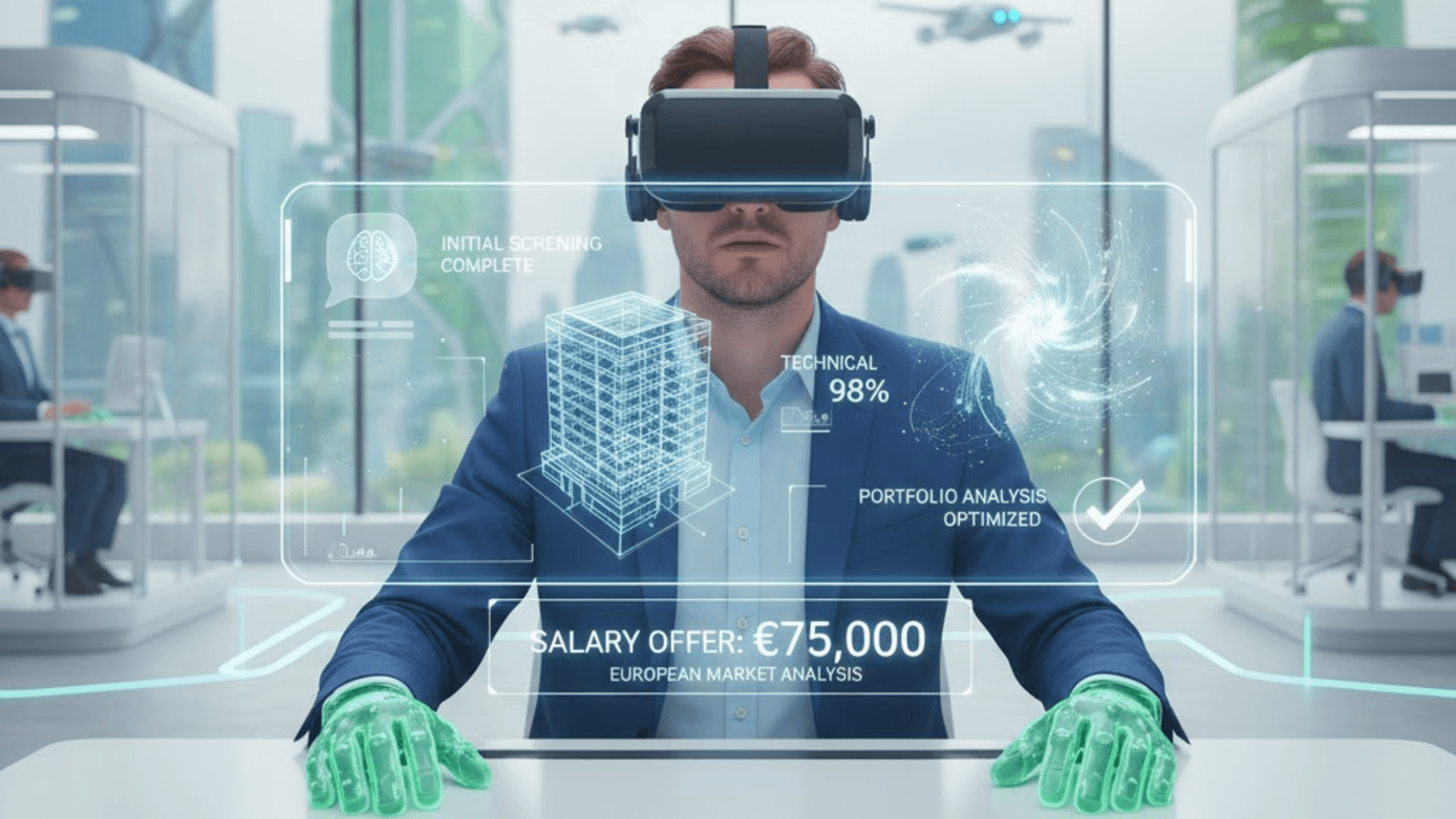
No human greeted him—an AI chatbot handled the initial screening. The technical assessment? Completed in VR. His portfolio? Scanned by machine learning algorithms before any human saw it. The salary offer? Determined by AI analyzing 10,000 comparable roles across Europe.
He got the job. But the experience shook him. "I felt like I was being processed, not interviewed," he told me over coffee last month.
James isn't alone. The job market in 2025 is fundamentally different from even two years ago. If you're still using 2023 job search strategies, you're already behind.
Here's what actually matters now—and how to position yourself for success in this transformed landscape.
Shift #1: Skills Beat Degrees (And It's Not Even Close)
Let me tell you about Maria. She dropped out of university in her second year. No bachelor's degree. No formal business education. Five years later, she's earning €75K as a product manager at a Cyprus tech company.
How? She built a portfolio of completed projects. She earned micro-credentials in UX design, agile methodology, and data analysis. She demonstrated capability, not credentials.
The Data Behind the Shift:
Most employers now prioritize demonstrated skills over educational pedigree. Companies like Google, Apple, and IBM famously dropped degree requirements years ago. In 2025, this is mainstream, not innovative.
What This Means for You:
Your degree still matters—but increasingly as baseline qualification, not differentiator. What sets you apart now:
Portfolio Work: Completed projects that demonstrate your capabilities
Micro-Credentials: Specialized certifications in high-demand skills
GitHub Contributions: For tech roles, your code speaks louder than your diploma
Published Work: Articles, case studies, presentations that showcase expertise
Measurable Results: Not "responsible for marketing" but "increased conversion by 34%"
The Action Plan:
If you're currently employed: Dedicate 3-5 hours weekly to building public proof of your skills. Write about your industry. Share project learnings. Create case studies. Build your portfolio while employed.
If you're job searching: Don't just list skills on your CV. Link to evidence. A GitHub repo. A published article. A presentation you gave. A project you led. Show, don't tell.
The Uncomfortable Truth:
Career changers now have advantages over traditional candidates. Why? Because proving skills matters more than having the "right" educational background. If you can demonstrate capability, your path doesn't matter.
Shift #2: AI Screens You Before Humans See You
Remember James from the opening story? His experience is becoming standard. Here's what's happening behind the scenes when you click "Apply":
Stage 1: The AI First Pass
Your CV gets scanned by an Applicant Tracking System (ATS). It's looking for keyword matches, proper formatting, relevant experience. A majority of applications are rejected at this stage by software. Before any human involvement.
Stage 2: The Algorithm Assessment
If you pass, AI analyzes your LinkedIn profile, digital footprint, and any online portfolios. It's building a comprehensive candidate profile using predictive analytics.
Stage 3: The Video Interview
Many companies now use AI to analyze your recorded video responses. It's assessing your word choice, facial expressions, energy level, and communication patterns. Yes, really.
Stage 4: The Skills Validation
You'll complete practical assessments—often monitored or evaluated by AI—before speaking with a human.
Only after passing all these stages do you meet an actual hiring manager.
How to Win the AI Game:
1. Optimize Your CV for ATS
Use standard section headers (Work Experience, Education, Skills)
Include keywords from the job description naturally
Use standard formatting (no fancy graphics, complex tables, or unusual fonts)
Save as .docx or PDF (check the application instructions)
Include a skills section with exact terminology from the job posting
2. Clean Up Your Digital Presence
Google yourself. What appears? That's what employers see.
Update your LinkedIn with keywords relevant to your target roles
Make your best work easily findable (portfolio website, LinkedIn featured section)
Remove or privatize content that doesn't align with your professional brand
3. Practice for AI Video Interviews
Speak clearly and at a moderate pace
Maintain energy and enthusiasm (AI flags low-energy candidates)
Look at the camera, not the screen
Ensure good lighting and minimize background distractions
Structure answers using the STAR method (Situation, Task, Action, Result)
The Controversial Take:
Some will say this is dehumanizing. They're not wrong. But fighting the system won't help you. Understanding and optimizing for it will. Once you get to the human conversation, your authentic self matters enormously. But you have to get there first.
Shift #3: Remote Work Created a Global Talent Market (And That Changes Everything)
Dimitri lives in Limassol. He works for a London startup. He's never met his colleagues in person. His salary is benchmarked against UK rates, not Cyprus rates. He's part of the new reality.
The Dual-Edged Sword:
Opportunity: You're no longer competing only with local candidates. You can apply for roles in London, Amsterdam, Berlin, or New York without relocating.
Challenge: You're no longer competing only with local candidates. That London role now has applicants from 30 countries.
What This Means Practically:
For Cyprus Professionals:
You can access higher-paying international roles while living here
Your cost of living is lower than London/Amsterdam/New York, making you price-competitive
Timezone overlap with Europe is favorable (unlike Asian or American remote workers)
English proficiency + EU work rights (for many) + digital skills = strong positioning
For International Candidates Looking at Cyprus:
Cyprus companies can now hire you without relocation
The Mediterranean lifestyle while working remotely is increasingly attractive
Tax incentives for certain professional categories make Cyprus appealing
Time zone works well for European and Middle Eastern markets
The Salary Reality Check:
Remote doesn't automatically mean "international salary." Some companies pay based on your location (Cyprus rates). Others pay based on the role's market value (often higher). Always clarify salary strategy during early conversations.
How to Position Yourself:
Highlight time zone as an asset: "Based in Cyprus, providing coverage for European business hours with availability for Middle Eastern clients"
Demonstrate remote work capabilities: Strong communication skills, self-management, experience with collaboration tools
Build location-independent skills: Digital marketing, software development, design, writing, data analysis
Network globally, not just locally: Join international professional communities, attend virtual conferences, engage on LinkedIn
Shift #4: Green Jobs Are No Longer Niche
Three years ago, "sustainability manager" was a specialized role at large corporations. Today, it's standard at companies with 50+ employees. This shift is creating thousands of new career paths.
The Numbers:
The World Economic Forum identifies sustainability roles among the fastest-growing career categories. But here's what's really interesting: it's not just dedicated sustainability positions. It's sustainability becoming part of every role.
The New Job Descriptions:
Supply chain managers must now understand carbon accounting
Marketing roles require knowledge of greenwashing regulations and authentic sustainability communication
Finance teams need ESG reporting capabilities
Product managers consider lifecycle analysis and circular economy principles
HR departments focus on green commuting programs and sustainable workplace practices
Elena saw this coming. As a mid-level operations manager, she took a three-month course in sustainable supply chain management. Six months later, she was promoted to head of sustainable operations with a 30% salary increase. Same company. New responsibilities that didn't exist 18 months earlier.
The Opportunity Nobody's Talking About:
Most professionals don't have sustainability knowledge. If you develop it now, you're ahead of 90% of your competition. It's not about becoming an environmental scientist. It's about understanding how sustainability principles apply to your existing role.
Quick-Win Sustainability Skills:
Carbon footprint analysis: Understanding how to measure and reduce organizational emissions
ESG reporting: Environmental, Social, and Governance metrics that investors increasingly demand
Circular economy principles: Designing products and processes for reuse, repair, and recycling
Green procurement: Supplier evaluation based on environmental practices
Sustainability communication: How to authentically talk about environmental initiatives
How to Add This to Your Profile:
Take a 4-6 week online course in sustainable business practices. Add it to your LinkedIn. Mention it in your CV. In interviews, discuss how you'd incorporate sustainability thinking into the target role. Even if it's not explicitly mentioned in the job description, demonstrating this awareness sets you apart.
Shift #5: Personal Branding Is No Longer Optional
Two candidates. Nearly identical experience. Same qualifications. One gets the offer. Why?
The hiring manager looked them up on LinkedIn. Candidate A had a sparse profile, last updated two years ago. Candidate B had an active presence—sharing industry insights, commenting thoughtfully on trends, publishing occasional articles.
Everything else equal, Candidate B felt like someone who cared about their field. Someone engaged and current. Someone who'd bring ideas and energy to the role.
The New Reality:
Your online presence is your first impression. Not your CV. Your LinkedIn profile, your digital footprint, what appears when recruiters Google your name—that's the real introduction.
Personal Branding Myths to Ignore:
Myth: "I need to be an influencer"
Reality: You need to be findable and credible. That's different from viral.
Myth: "I need to post every day"
Reality: Quality over frequency. One thoughtful post weekly beats seven low-value updates.
Myth: "I need to be controversial to stand out"
Reality: Consistently valuable content builds better reputation than attention-seeking takes.
The Minimum Viable Personal Brand:
If you do nothing else, do these five things:
Complete Your LinkedIn Profile Fully
Professional photo. Compelling headline (not just your job title). Detailed experience with achievements. Skills endorsed by colleagues. Recommendations from people who've worked with you.Share Your Work
Completed a successful project? Write about it (without violating confidentiality). Learned something valuable? Share the insight. Attended a great conference? Post your key takeaways.Engage Authentically
Comment thoughtfully on others' posts. Ask questions. Share perspectives. Build relationships through value, not self-promotion.Demonstrate Expertise
You don't need to be the world's foremost expert. You need to be knowledgeable enough to help others. Answer questions in your field. Share resources. Offer perspectives.Be Consistent
Monthly is fine. Weekly is better. The key is regularity, not volume. Block 30 minutes every Monday to engage with your network.
Thomas committed to this for six months. Every Monday, 30 minutes on LinkedIn. Sharing one article he found valuable. Commenting on three posts from his network. Publishing one short post monthly about his work (with permission from his employer).
Six months later, three recruiters reached out with opportunities. His manager noticed and involved him in higher-profile projects. His network expanded from 200 connections to 600+. Total time investment: 12 hours over six months. Return: immeasurable.
What the Next 12 Months Will Bring
These five shifts aren't slowing down. They're accelerating. Here's what I'm watching for the rest of 2025:
AI Capabilities Will Expand
Expect AI to play a bigger role in everything from job matching to performance reviews. Companies using AI in hiring will continue refining their systems. Knowing how to present yourself to both AI and humans becomes critical.
Skills Validation Will Become More Sophisticated
Beyond traditional interviews, expect more practical assessments, work samples, and trial projects. Companies want proof of capability, not just claims.
The War for Talent Will Intensify in Specific Areas
Cybersecurity, AI/ML expertise, data analysis, sustainable business practices, digital marketing—demand far exceeds supply. If you have these skills, leverage them.
Flexible Work Will Become More Nuanced
The binary of "remote vs. office" is evolving into hybrid models, flexible schedules, and outcome-based work arrangements. Companies that resist this will struggle to attract top talent.
Location Arbitrage Will Grow
More professionals will optimize for "high income, moderate cost of living" locations. Cyprus, Portugal, Estonia, and similar markets will benefit from this trend.
Your 2025 Job Market Action Plan
Information without action changes nothing. Here's what to do this week:
Day 1: Audit Your Digital Presence
Google yourself. What appears?
Review your LinkedIn profile. Complete? Current? Keyword-optimized?
Check your privacy settings on other platforms
Day 2: Optimize for AI
Update your CV with relevant keywords
Ensure formatting is ATS-friendly
Add a skills section matching your target roles
Day 3: Start Your Portfolio
Document 3-5 significant achievements with measurable results
Create case studies of successful projects (respecting confidentiality)
Identify gaps in your public proof of skills
Day 4: Develop One New Capability
Choose one high-value skill (sustainability, data analysis, AI basics)
Find a quality online course
Block 3-5 hours weekly for learning
Day 5: Launch Your Personal Brand
Share one valuable insight on LinkedIn
Comment thoughtfully on three posts
Schedule recurring time for network engagement
The Truth About Navigating 2025's Job Market
Here's what I want you to understand: these shifts feel overwhelming if you're reading about them for the first time. But they're navigable if you're intentional.
You don't need to master AI overnight. You don't need to become an influencer. You don't need to completely reinvent yourself.
You need to make small, strategic adjustments. Optimize your profile for AI while staying authentic. Build your skills portfolio while excelling in your current role. Develop your personal brand while respecting your privacy boundaries.
The professionals who thrive in 2025 aren't necessarily the most talented. They're the most adaptable. They're the ones who saw these shifts coming and positioned themselves accordingly.
James, Maria, Dimitri, Elena, Thomas—they're not superhuman. They're strategic. They saw the job market changing and adjusted their approach.
Your turn.
How DART Recruitment Helps You Navigate the New Job Market
At DART Recruitment Cyprus, we're not just filling positions. We're helping professionals navigate exactly these shifts.
We can help you:
Optimize for AI screening: CV reviews that pass ATS systems while staying authentic
Position yourself strategically: Guidance on skill development and personal branding
Access the hidden market: Opportunities that never get publicly posted
Negotiate effectively: Support navigating salary discussions in remote/global roles
Plan your next move: Strategic career counseling based on market realities
Whether you're exploring opportunities in Cyprus, seeking remote roles with international companies, or positioning yourself for career advancement, we can help you navigate this transformed landscape.
Ready to make your move? Book a free job market strategy session. We'll discuss your goals, current positioning, and how to leverage these trends to your advantage.
Or explore current opportunities that align with the skills and strategies we've discussed.
The 2025 job market is different. But with the right strategy, it's full of opportunity.
Navigate the Modern Job Market
Stay ahead with these insights:
Recommended for You

The Skills Gap Nobody's Talking About: Why Experience Isn't Enough Anymore
10 years of experience used to guarantee career growth. Not anymore. Here's what employers actually want in 2025 — and how to position yourself.

Remote Work Is Dead. Here's What's Replacing It in 2025
The remote work revolution of 2020-2022 is over. Employers are changing the rules. Here's what the 2025 job market actually looks like — and how to position yourself.